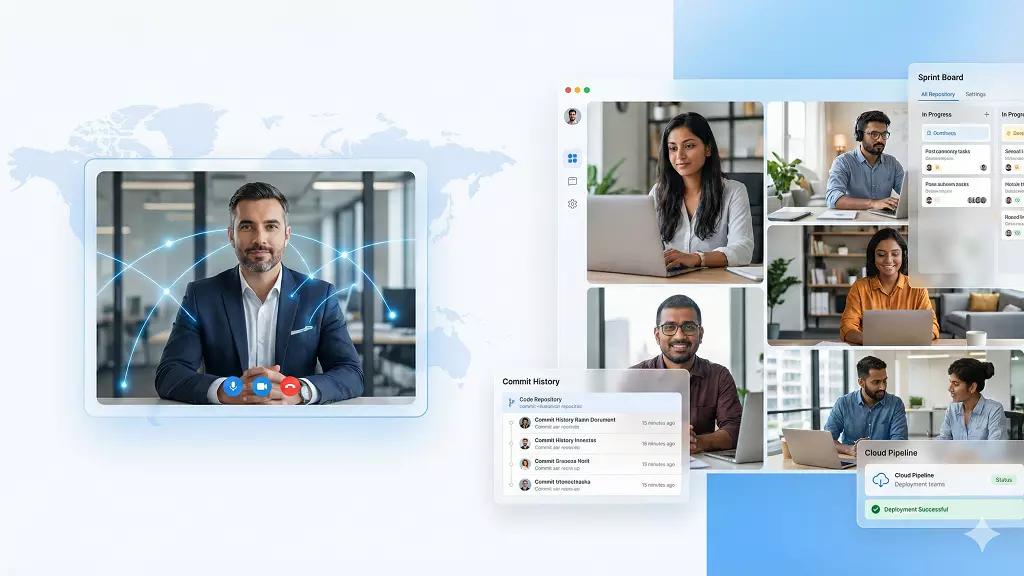
A remote software development team in India allows companies to access a large pool of skilled engineers, reduce development costs by approximately 30–60%, and scale technical capabilities efficiently. In 2026, India remains a preferred destination due to its mature outsourcing ecosystem, strong English communication, cloud-native expertise, and flexible hiring models.
This assessment is based on aggregated industry research, global outsourcing trends, and enterprise workforce studies.
Quick Summary:
Remote software development has become a standard business model for startups, enterprises, and technology-driven organizations. India is one of the most established locations for building remote software development teams due to its large engineering talent pool, cost efficiency, and experience working with global clients. Companies choose remote teams in India to accelerate development, reduce operational costs, and maintain long-term scalability.
Remote software development enables organizations to build, manage, and scale engineering teams without geographic limitations. In 2026, increasing demand for digital products, talent shortages in local markets, and the adoption of cloud-based collaboration tools have made remote development a long-term strategy rather than a temporary solution.
This guide is intended for founders, CTOs, and decision-makers exploring how to build and manage a remote software development team in India.
After the lockdown phase, businesses are relying on remote software development teams more than ever as it seems comfortable with a lot more benefits. According to industry predictions, roughly 80% of software engineers are expected to work fully remotely by the end of 2026, with many more adopting hybrid schedules that blend remote and office based work.

Industry research and workforce trend analyses indicate that a significant majority of software engineers are expected to work remotely or in hybrid models by 2026. Over the past decade, demand for remote software talent has increased several-fold, driven by cloud adoption and global hiring flexibility.
India also hosts one of the world’s largest Global Capability Center (GCC) ecosystems, employing a substantial number of professionals across technology, engineering, and digital operations.
India stands out as a global epicenter when it comes to where companies are building these remote development teams. With a strong bench of capable professionals, a growing network of Global Capability Centers (GCCs) and competitive cost structures, India is increasingly the destination of choice for companies seeking world class software development talent.
In fact, India hosts around 1.9 million professionals in GCCs alone with projections showing job growth accelerating further as digital transformation continues across various sectors.
These insights reflect commonly cited findings across enterprise technology publications and global remote work studies.
This guide is written based on enterprise outsourcing experience, workforce studies, and global delivery models used by SaaS & Fortune 1000 companies.
You might now know the reason for sharing all this information. Yes, this blog is curated for the CTOs, tech leaders and organizations willing to build or hiring India-based development teams.
Why Remote Software Development Still Matters in 2026

• Global demand for skilled software engineers continues to exceed local supply in many regions
• Cloud platforms and DevOps tools have removed dependency on physical office locations
• Distributed teams enable faster delivery through time-zone overlap
• Businesses prioritize cost efficiency without compromising technical quality
• Remote-first companies have become operationally mature and scalable
What Is a Remote Software Development Team?

A remote software development team is a group of developers, designers, testers, and engineers who collaborate virtually using online communication tools, project management systems, and cloud infrastructure instead of working from a single physical office. These teams may operate fully remotely, in hybrid formats, or as offshore development units supporting global organizations.
Why Build a Remote Development Team in India?

India is an attractive destination for remote software talent and there are several compelling reasons behind this shift. You might be exploring the rationale behind one of the most attractive destinations.
Read: Why Gulf Startups Hire Indian Remote Developers
Benefits of Building a Remote Team Software Development in India

Organizations choose remote development teams in India for a combination of economic, operational, and technical reasons. These benefits are observed across startups, mid-sized companies, and enterprises operating in multiple industries.
-
Cost Effectiveness: The cost Indian software development companies offer are lower compared to Western countries. You can save around 30-50% on talent without hammering the quality of your project.
-
Rich Source of Talented Developers: India produces millions of engineering graduates annually, offering deep expertise in various technologies and tools.
-
Time Zone Advantage: Your product has 24/7 development as the team can work across time zones, speeding up delivery and support.
-
High English Proficiency: With English skills the Indian developers facilitate smoother communication and collaboration.
-
Scalability & Flexibility: Remote teams are easy to scale up or down for specific projects and access specialized skills quickly.
-
Innovation & Quality: Developers bring fresh perspectives and adhering to global standards, fostering innovation.
-
Faster Time-to-Market: With remote teams rapid execution and continuous development cycles help launch MVPs and products quicker.
-
Reduced Overhead: Cross-border teams eliminate costs associated with office space, utilities and local recruitment or in-house teams.
Read: How UAE startups reduce development costs with offshore teams
Challenges of Remote Software Development
Distributed engineering teams may face challenges such as time-zone coordination, communication delays, onboarding complexity, and maintaining alignment across distributed teams. Differences in working hours and cultural expectations can also require adjustment.
However, industry experience indicates that these challenges are primarily related to process and management practices rather than geographic location. Clear documentation, defined workflows, and outcome-based performance tracking significantly reduce these risks.
1. Technical & Infrastructure Issues
These issues include inconsistent internet, hardware problems and security vulnerabilities. You can overcome these by providing the right tools, ensure robust security such as VPNs, MFA, offer technical support and anticipate potential issues.
2. Knowledge Sharing & Onboarding
While onboarding the teams feel difficulty in transferring institutional knowledge and integrating new hires. By creating a centralized knowledge base, conduct efficient onboarding and promote pair programming.
3. Building Trust & Accountability
Sometimes lack of physical presence hinders trust and may make performance monitoring harder. In this situation you can set clear goals, use project management tools like Trello, Asana for visible progress and recognize achievements that foster transparency and promote reliability.
4. Time Zone & Cultural Differences
Virtual software engineers coordinate across different time zones and differing cultural communication styles. You can schedule core overlap hours, be sensitive to cultural nuances, document everything and use time tracking tools to respect individual schedules.
5. Communication & Collaboration Gaps
Mainly remote teams face miscommunication, lack of real time feedback and siloed work. To overcome this you can use integrated tools like Jira, Slack, encourage over-communication, maintain regular syncs like daily standups and balance synchronous/ asynchronous communication.
6. Isolation & Team Bonding
Teams working remotely can lead to feelings of disconnection and loneliness. By scheduling virtual social events, creating dedicated social channels and investing in team building activities can address these isolation issues.
Hire Developers
Services
Defining Your Software Development Requirements
Before you start to hire remote software development teams first get this crystal clear to define your software development requirements. Clarity is the key to aligning expectations, avoiding miscommunication and ensuring that every developer you bring onboard understands your vision, scope and goals of your project. Here’s how you can do that:
Read: Guide to hiring remote developers from India
1. Project & Technical Requirements
-
Clearly state the product vision, roadmap, deliverables and timelines to shape team structure and tech choices.
-
Specify required frameworks, tools, cloud platforms with prioritizing adaptability over checking every box.
-
Decide between a dedicated team or outsourced model considering long term scalability.
-
Specify detailed technical skills with core competencies, experience levels and required certifications.
2. Team & Collaboration Needs
-
Define overlap hours for real time collaboration and set communication protocols.
-
Look for autonomy, problem solving, strong English, cultural fit and proactive approach.
-
Find individuals who align with your company’s core values for better integration.
-
Prioritize candidates with proven remote work experience and teamwork success.
3. Operational & Infrastructure Needs
-
Specify project management such as Jira, Trello, version control like Git, communication like Slack, Zoom and collaboration tools.
-
Mandate VPNs, secure data handling and compliance with your protocols.
-
Plan a comprehensive, welcoming process for culture, tools and project goals.
-
Establish clear performance indicators and monitoring methods.
Cost of a Remote Software Development Team in India (2026)
The cost of hiring a remote software development team in India typically varies based on experience level, technology stack, and engagement model. Hourly rates generally range between $10 and $60, while full development teams can cost approximately 40–60% less than equivalent in-house teams in North America or Europe.
These figures are based on aggregated industry reports, global outsourcing studies, and enterprise workforce data.

Remote Software Development: India vs US vs Europe (2026 Comparison)
|
Factor |
India |
United States |
Europe |
|
Average Developer Cost |
$10–$60/hour |
$60–$150/hour |
$40–$100/hour |
|
Talent Pool Size |
Very large (millions of engineers) |
Large but competitive |
Moderate, varies by country |
|
Cost Efficiency |
High (30–60% savings) |
Low |
Medium |
|
English Proficiency |
High |
Native |
High (varies by region) |
|
Time Zone Flexibility |
Excellent for US & Europe |
Limited for global teams |
Moderate |
|
Remote Work Maturity |
High (offshore & remote-first experience) |
High (mostly domestic teams) |
Medium to high |
|
Scalability Speed |
Fast |
Slower due to hiring competition |
Moderate |
|
Global Client Experience |
Extensive (US, UK, EU, APAC) |
Mostly domestic |
Regional + global |
|
Compliance & Data Security |
Strong (ISO, SOC, GDPR-aligned practices) |
Strong |
Strong (GDPR-led) |
|
Best Use Case |
Cost-efficient scaling, long-term development |
Complex, high-budget projects |
Nearshore, compliance-heavy projects |
Read: Hiring Developers in India vs. Eastern Europe
Top Hiring Models for Remote Software Development Teams in India
Selecting the right hiring model is a foundational step and when it comes to building one, choosing wisely, considering all factors is essential. Each model offers a different balance of control, cost, flexibility and operational complexity.

Exploring these options helps you align your hiring strategy with your business goals, project scope and growth plans.
1. Dedicated Development Team Model
The Dedicated Development Model involves creating a specialized, long term unit (developers, QAs, designers) working exclusively on your project. This team functions as an extension of your in-house workforce, following your processes, tools and business objectives.
This model is effective for businesses with continuous development needs, evolving product roadmaps or long term digital transformation initiatives.
|
Pros |
Cons |
|
|
Best for: Projects which are for the long run, startups, SaaS products and enterprises seeking continuity.
2. Staff Augmentation Model
The staff augmentation model involves partnering with a local provider to quickly add vetted, skilled professionals like developers, designers, etc to your existing team. They function as direct extensions of your staff for temporary needs, long term projects or specialized skill gaps.
This approach is ideal for bridging skill gaps, offering flexibility, cost effectiveness and access to India’s pool without permanent hiring commitments.
|
Pros |
Cons |
|
|
Best for: mainly for the projects that have short to mid level needs, niche skill requirements and rapid scaling.
3. Project-Based Hiring Model
The project based hiring model in India involves engaging talent for specific, time bound projects with clear deliverables. In simple words, the remote teams take full responsibility for delivering a project within a fixed scope, timeline and budget.
This approach minimizes management overhead and offers predictable outcomes.
|
Pros |
Cons |
|
|
Best for: MVPs, proof of concept and clearly defined projects.
4. Freelance Hiring Model
The Freelance model in India involves remote developers for short term or project based needs or engaging specialized agencies/ EORs for more structured and long term staffing with compliance. While cost effective, this model requires close supervision and strong coordination.
|
Pros |
Cons |
|
|
Best for: Small tasks, feature enhancements or experimental work.
5. Direct Hiring Model
The direct hiring model means your company sets up a legal entity in India or uses an Employer of Record to directly hire, pay and manage Indian talent. This model offers maximum control and loyalty but requires significant effort for compliance, payroll and HR.
Here’s how it works with a few steps to follow, defining roles, choosing recruitment channels like job boards, agencies, managing local labor laws and handling setup.
|
Pros |
Cons |
|
|
Best for: Large enterprises and companies that are planning scaling operations for the long run.
6. Hybrid Hiring Model
The hybrid model combines multiple approaches like a dedicated core team supported by augmented staff or freelancers. This provides both stability and flexibility while optimizing costs.
|
Pros |
Cons |
|
|
Best for: Growing companies, complex projects and dynamic workloads.
Read: Best Practices to Manage a Remote Software Development Team
Best Tools for Remote Software Development Team Management

Once you’re clear with defining requirements and the hiring, you need the best tools to equip your remote teams to operate smoothly and productively. The tools you choose impacts communication, collaboration, productivity and accountability across distributed teams.
Here is the list of the best tools category wise and clear reasons why they’ll help:
|
Tool Category |
Tool Name |
Primary Use |
Key Benefits |
|
Communication |
Slack |
Team messaging & channels |
Real-time communication, channels by project, searchable history |
|
Microsoft Teams |
Chat + video meetings |
Enterprise-ready, integrates with Microsoft 365 | |
|
Video Conferencing |
Zoom |
Video meetings & webinars |
Reliable HD calls, breakout rooms, global adoption |
|
Google Meet |
Video conferencing |
Easy integration with Google Workspace | |
|
Project Management |
Jira |
Agile project tracking |
Powerful sprint planning, backlog management, reporting |
|
Trello |
Kanban-style task boards |
Simple task visualization and drag-and-drop workflow | |
|
Asana |
Task and work tracking |
Flexible views, dependency tracking, milestones | |
|
Code Collaboration |
GitHub |
Source code hosting & version control |
Industry standard, pull requests, code review |
|
GitLab |
Version control & CI/CD |
End-to-end DevOps support | |
|
Time & Productivity |
Clockify |
Time tracking |
Easy tracker, reports, billable hours tracking |
|
Toggl Track |
Time & productivity insights |
Simple UI + robust time tracking analytics | |
|
Documentation |
Confluence |
Team wiki & docs |
Central knowledge base with collaborative editing |
|
Notion |
All-in-one workspace |
Notes, docs, databases in one place | |
|
Design Collaboration |
Figma |
UI/UX design & prototyping |
Real-time design editing, easy handoff |
|
Virtual Whiteboarding |
Miro |
Brainstorming & whiteboarding |
Interactive boards for workshops & planning |
|
DevOps & CI/CD |
Jenkins |
Continuous integration automation |
Highly configurable, plugin ecosystem |
|
CircleCI |
CI/CD pipeline automation |
Cloud-friendly, quick setup | |
|
Security & Compliance |
LastPass |
Password management |
Secure vault, shared passwords for teams |
|
1Password |
Team password control |
Easy administration, high security standards |
Top 10 Best Practices to Manage a Software Development Team Remotely
Hiring the remote developers is like building blocks where each piece has its significance. While you seem to have the best tools, knowing how to manage your team is equally important. By doing so, you help your team to achieve their full potential without stifling their creativity.
Here are the proven best practices that help teams deliver faster and have better work-life balance.
1. Set Clear Goals, Roles & Expectations
Clearly defining roles, deliverables, timelines and performance metrics from the start will allow remote teams to be clear on their side what they’re responsible for, why it matters and how success is measured. You can use written documentations for:
-
Project goals and milestones,
-
Individual responsibilities,
-
Coding standards and workflows.
2. Establish Ground Rules and SOPs
Allow offshore remote developers to understand workflows, communication norms and responsibilities clearly by creating core documents. This acts as a single source of truth for the entire team.
Read: Why European Companies Prefer Remote Indian Teams for React Development
Implementing Standard Operating Procedures (SOPs) to ensure the consistency across tasks such as code reviews, deployments, testing and reporting. With SOPs, teams can reduce dependency on each member and allow all of them to work independently without needing constant supervision or approvals.
3. Leverage Modern Collaboration Tools
Provide the right set of digital tools. Using modern collaboration platforms keeps everyone aligned and informed regardless of the location. These tools eliminate confusion and improve team coordination when consistently used.
-
Tools like Jira, Trello and Asana help track project management tasks, sprints, deadlines and ownership.
-
For efficient communication, apps like Slack and Microsoft Teams enable quick updates, discussions and async collaboration.
-
Zoom and Google Meet are the video conferencing tools that add a human touch through face to face interactions.
-
With shared calendars, remote teams can align their schedules across different time zones and rescue meeting conflicts.

4. Avoid Micromanagement & Encourage Autonomy
Instead of tracking every move and demotivating remote development teams, focus on outcomes and deadlines. You need to trust developers to manage their schedules as long as deliverables are met. Replace constant check-ins with weekly stand ups, sprint reviews or milestone-based updates. This not only boosts morale but also encourages ownership and accountability.
5. Prioritize Feedback and Continuous Support
Scheduling regular feedback sessions weekly or monthly to discuss progress, challenges and growth opportunities. This ways remote teams feel encouraged, comfortable sharing blockers, workload or process improvement ideas. Constructive and timely feedback helps prevent disengagement, improves performance and foster a culture of continuous improvement.
6. Respect Time Zone Differences
Keeping the time zone difference in mind for remote teams is inevitable. You can,
-
Schedule meetings during overlapping working hours whenever possible,
-
Rotate meeting times fairly if the team spans multiple continents.
-
Rely on asynchronous communication, recorded video updates, shared document and detailed task notes. This keeps everyone in sync without forcing odd working hours.
Respecting each other’s time shows empathy and builds trust across the team.
7. Focus on Emotional Well Being & Team Culture
To avoid feeling isolated, you can make a conscious effort to build a positive team culture. The better way is to organize virtual team building activities such as casual coffee chats, online games or informal catch up sessions.
Encourage non-work conversations to replicate the social side of office life. Publicly recognizing achievements no matter big wins or small contributions. This overall boosts motivation and reinforces a sense of belonging.
8. Plan Occasional In-Person Meetups
The best way is to plan occasional in-person meetups, offsites or retreats if your budget and logistics allow. Even meeting once a year can strengthen team bonds. Meetups like face to face interactions can build trust faster, improve communication and enhance long term collaboration and even often pay off in improved team work and engagement once everyone returns to remote work.
9. Know You Team Personally
Managers are not just assigned to manage tasks but to manage people as well. Take time to understand each developer’s characteristics like strengths, motivations, working styles and challenges. Deal each one of them with their specific skillset and understanding. Personalized management helps you assign tasks more effectively, support professional development and keep engagement level high.
Read: CTO Guide to Hiring Indian Software Development Teams
Normally when team members feel understood, they are more likely to stay committed and deliver their best work.
10. Create Distraction-Free Work Environment
While encouraging developers to set up a quiet and well equipped work environment it is equally important for a productive remote team to start with a productive workspace. For this they required a reliable internet, proper hardware and minimal distractions.
Uninterrupted coding sessions and focused meetings lead to better output, fewer errors, and faster delivery. Supporting a distraction-free setup shows that you value both quality work and developer well-being.
The Bottom Line
By the end of this guide you have explored all the aspects of this experimental approach ‘Remote software development team’. It’s a proven, scalable strategy for modern businesses. With access to a vast talent pool, cost efficiency, and global delivery capabilities, India continues to be a top destination for remote software development in 2026 and beyond.
However, success doesn’t come from hiring alone. It comes from choosing the right hiring model, setting clear processes, leveraging modern collaboration tools, respecting time zones, and fostering a strong remote culture. When these elements work together, remote teams become agile, resilient, and highly productive.
For businesses looking to accelerate their digital journey, partnering with an experienced software development company can significantly reduce risk and improve outcomes.

Some organizations choose to work with experienced software development partners to reduce operational risk and accelerate team setup. Established technology service providers in India support businesses by offering structured hiring models, delivery frameworks, and long-term engineering support.
If you’re asking, “Is India a good choice for remote software development in 2026?”, the answer depends on your business goals, technical requirements, and budget. Many companies choose India for its skilled engineers, cost efficiency, and ability to scale development teams quickly while maintaining delivery quality.
Technology adoption trends, market conditions, and organizational requirements may evolve over time. This guide is intended for informational and decision-support purposes and reflects commonly observed industry practices rather than guaranteed outcomes.

FAQs
Is India a good country for remote software development?
Yes, India is widely used for remote software development due to its large talent pool, cost advantages, English proficiency, and experience working with global companies.
How much does a remote development team in India cost?
Costs typically range between $10 and $60 per hour per developer, depending on skills, experience, and technology stack.
What hiring model is best for remote development teams?
The best model depends on project duration and control requirements. Dedicated teams and hybrid models are commonly used for long-term development.
What roles are included in a remote software development team?
Common roles include frontend and backend developers, QA engineers, UI/UX designers, DevOps engineers, and project managers.
Author Profile: Mahipal Nehra is the Digital Marketing Manager at Decipher Zone Technologies, specializing in content strategy, and tech-driven marketing for software development and digital transformation.
Follow us on LinkedIn or explore more insights at Decipher Zone.
Let’s Hire A Trusted Remote Development Team Today
From MVPs to full-scale solutions, Decipher Zone has delivered 350+ successful custom applications worldwide.
📞 Contact Us Now or 💬 Chat on WhatsApp