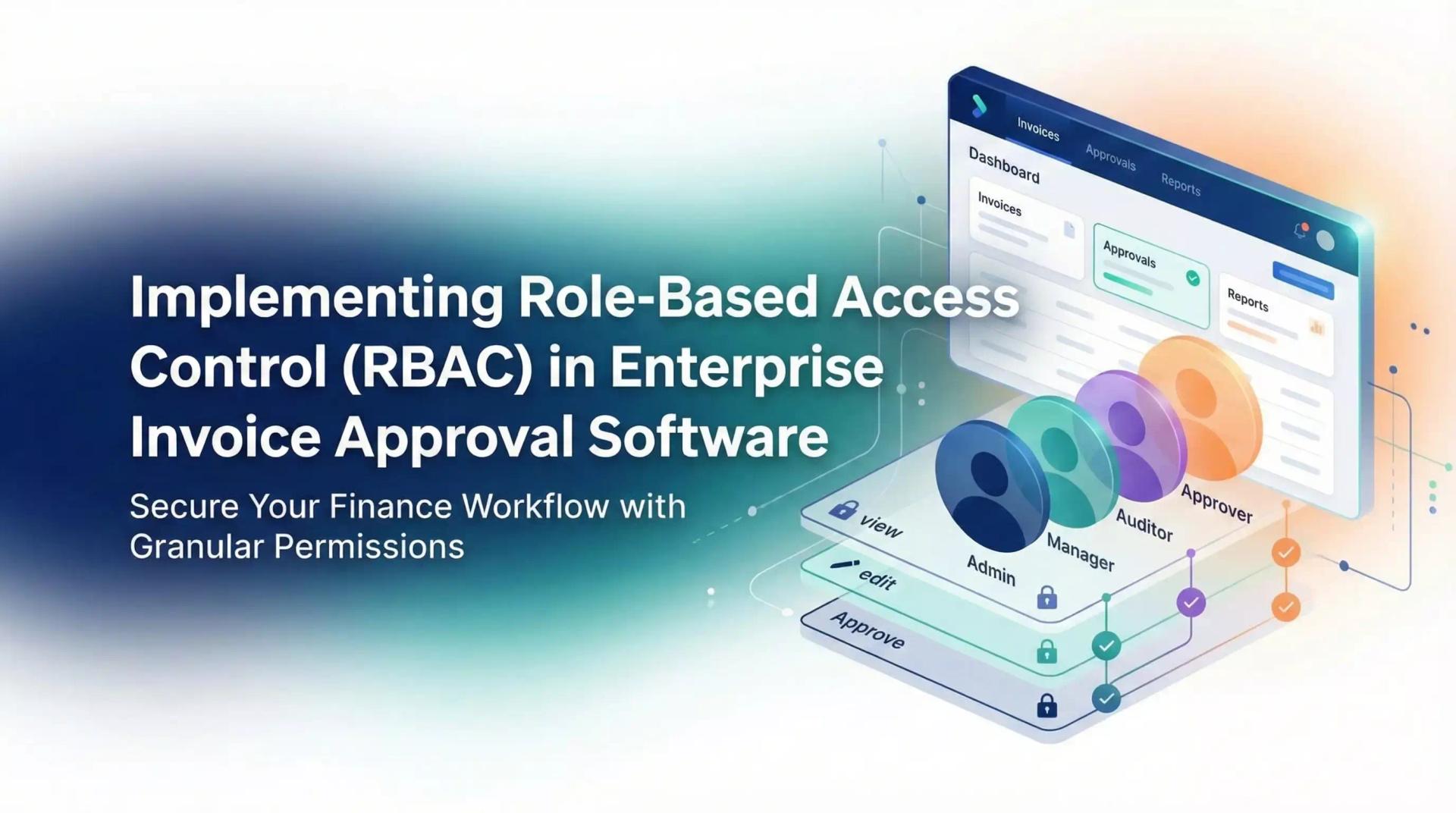
Strong controls are no longer optional when finance teams grow and processes scale. As the number of invoices grows, it is necessary that access remains understandable, restricted, and goal-oriented. This is precisely the point at which invoice approval software proves to be a key instrument for safe and efficient operations, particularly when role-based access control is seamlessly integrated into the system from the outset.
Enterprises often find themselves in a situation where their primary challenge is not a lack of technology, but rather ensuring that the right people are given the right access. Taking care of this beforehand gives back by saving time, money, and trust.
Enterprises that follow zero-trust security and least-privilege access models are better positioned to prevent internal misuse and unauthorized financial exposure as teams scale.
Read: software development

What role-based access control really means
Role-based access control is a straightforward concept with significant benefits. Instead of giving access to individuals on a case-by-case basis, permissions are assigned based on job roles.

-
A finance executive sees approvals and reports.
-
An accounts clerk handles invoice entry.
-
A manager checks and gives the green light within predetermined boundaries.
Such organization in the system of invoice approval helps keep the flow of work consistent and eliminates the possibility of getting mixed up.
Why enterprises need RBAC in invoice workflows

When there are larger teams, handling access manually becomes more dangerous. One incorrect permission can expose sensitive data or delay approvals. Role based access control helps enterprises by:
-
Reducing errors caused by too much access
-
Protecting financial data from internal misuse
-
Keeping audits simple and stress-free
When access is intentional, trust builds across teams.
How RBAC improves invoice approval speed
Speed is not just about automation. It is also about clarity. When users log in and see only what they need, decisions occur more quickly. There is no need to search through unrelated screens or files.
When paired with invoice automation and subscription billing platforms, RBAC helps eliminate approval bottlenecks without compromising financial control.
Modern invoice approval software uses role clarity to remove friction from daily tasks. This helps invoices move forward without delays.
Reducing risk without slowing people down
Security often gets blamed for slowing work. RBAC proves the opposite. By limiting access to what matters, teams focus better. Fewer clicks. Fewer mistakes. Clear responsibility.
This balance between control and ease is what enterprises look for in scalable systems.
Designing roles that actually make sense

RBAC will be more efficient when the roles represent the natural flow of work. We suggest starting with the process of moving invoices from filing to payment. Then figure out who uses which resources and for what purposes.
Typical roles might be:
-
Invoice creator
-
Reviewer
-
Approver
-
Financial controller
-
Audit viewer
Clear roles provide easier management of the invoice approval software in the long term.
Compliance becomes simpler and clearer

Audits often fail due to unclear access trails. RBAC fixes this. If roles are defined, each of their actions is explained. The auditors quickly identify the person who approved the transaction and in what capacity.
They also confirm compliance with internal policies and external regulations.
This level of traceability becomes even more powerful when combined with role-based access control in compliance tracking software, where every action is logged and auditable by design.
Supporting growth without chaos
Corporations continue expanding as they regularly add users. Mulling over access without the help of RBAC makes a complete mess of it.
Scalable systems rely on secure integrations, and implementing role-based access control in modern API-driven software architectures ensures access remains controlled even as user count grows.
With role-based access control, hiring new employees is streamlined. Assign a role and the system handles the rest. This makes invoice approval software future-ready without constant rework.
Building trust across finance teams

People work better when boundaries are clear. RBAC removes doubt. Team members are aware of their responsibilities and understand what they are not responsible for.
This reduces internal friction and improves accountability. Trust within a structure is a reflection of trust within a group.
Best practices for smooth RBAC implementation
In order to implement RBAC in the right way, enterprises need to:
-
Make the roles simple and close to reality
-
Check the access continuously
-
Set permissions in accordance with approval limits
-
Familiarize users with the importance of access
RBAC is a continuous process and not a definite decision. It evolves along with the company.

Conclusion
Role based access control is not just a security feature. It is a productivity tool. When implemented properly, it helps enterprises protect data, expedite approvals, and maintain compliance without stress. The correct invoice approval software uses RBAC to bring structure and confidence into financial workflows.
As businesses scale, clarity becomes a source of power. RBAC delivers that clarity while keeping finance teams focused on what matters most.
FAQs About Role-Based Access Control (RBAC) in Enterprise Invoice Approval Software
Q: What is role-based access control (RBAC) in invoice approval software?
A: RBAC is a security system where access to invoices and approvals is assigned based on user roles, ensuring only authorized personnel can view or approve transactions.
Q: How does RBAC improve efficiency in enterprise invoice workflows?
A: By showing users only the invoices relevant to their role, RBAC reduces confusion, speeds up approvals, and prevents errors.
Q: Why is RBAC important for compliance in finance teams?
A: RBAC maintains a clear audit trail of who approved each invoice, simplifying regulatory compliance and internal audits.
Q: Can RBAC scale with growing enterprise finance teams?
A: Yes, RBAC allows new employees to be assigned predefined roles, keeping access structured and secure as the team expands.
Q: Is RBAC only a security feature?
A: No, RBAC also enhances productivity by streamlining approvals, reducing errors, and improving accountability in financial workflows.
Author Profile: Mahipal Nehra is the Digital Marketing Manager at Decipher Zone Technologies, specializing in content strategy, and tech-driven marketing for software development and digital transformation.
Follow us on LinkedIn or explore more insights at Decipher Zone.
“Start optimizing your invoice approvals with RBAC now — see how Decipher Zone solutions can help.”