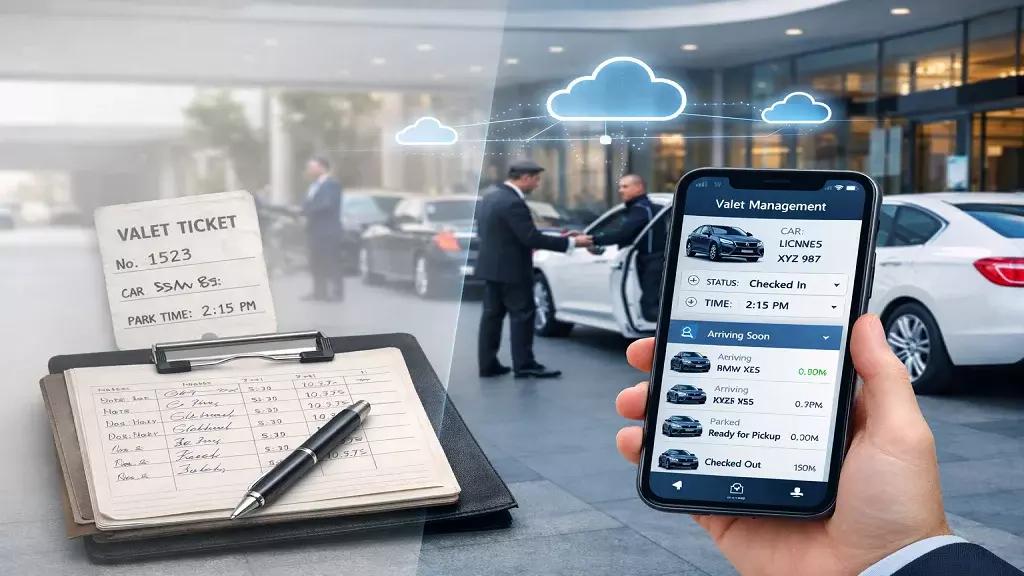
The physical parking footprint of an enterprise hospitality property or healthcare network is no longer a mere amenity; it is a high-stakes cost center. For chief financial officers, risk managers, and property developers, continuing to rely on manual, paper-based valet workflows introduces profound operational vulnerabilities.
Modern loss prevention mandates a shift toward an AI powered valet parking management platform to mitigate these invisible drains on enterprise profitability.
The Reality of Revenue Leakage
Manual parking systems lack the structural controls required to secure cash flows and validate transactions accurately.
1. Internal Cash Skimming and Validation Fraud
Paper tickets create an unmonitored environment where physical currency can easily disappear before registration. Without a digital timestamp tied to a specific user account, attendants can underreport parking durations, pocket the cash difference, and issue manual overrides.
This lack of financial visibility routinely costs operators an estimated 15% to 25% of their potential parking margins.
2. Auditing the Invisible Trail
Reconciling paper stubs against actual vehicle volume at the end of a shift is an administrative nightmare. Auditors cannot verify missing ticket numbers or confirm whether a complimentary validation was legitimate or fraudulent.
A cloud-based ledger removes this ambiguity by tracking every vehicle life cycle from entry to departure in real time.
The Blind Damage Claim Liability
Physical intake processes expose properties to catastrophic financial liabilities through fraudulent property damage claims.
1. The Failure of Attendant Scribbles
Traditional paper tickets rely on an attendant quickly circling pre-existing vehicle damage on a small cardboard diagram. This method is highly subjective, easily contested by vehicle owners, and legally indefensible in a high-value property dispute.
When a luxury vehicle owner claims a dent occurred under valet custody, the enterprise lacks the objective proof required to deny the claim.
2. Automated Loss Prevention via High-Definition Scans
Transitioning to digital intake allows properties to deploy mobile phone scans or high-definition camera arrays at the valet lane. These systems instantly log the exact cosmetic condition of a vehicle upon arrival, embedding the visual evidence directly into the digital record.
This immediate, undeniable documentation neutralizes fraudulent claims before the vehicle even moves to a parking stall.
The Chain of Custody Breakdown
Securing multi-million-dollar physical assets requires strict, unbroken operational accountability at every touchpoint.
1. Vulnerabilities in Physical Key Management
Paper-based operations frequently utilize unsecured keyboard boxes and physical stubs that any individual can access or misplace. If a ticket is lost, matching a guest to their vehicle keys becomes a slow, error-prone process that compromises asset security.
Furthermore, physical systems fail to record exactly which employee handled a specific set of keys at any given minute.
2. Establishing a Digital Chain of Custody Audit
Enterprise security governance requires an immutable log of asset custody to minimize internal risk. Modern digital frameworks require biometric or credentialed digital logins whenever an employee accesses a vehicle or key locker.
This automated tracking establishes clear accountability, reduces vehicle retrieval times, and drastically lowers the risk of vehicle theft.
The Data Privacy and Compliance Shift
Modern corporate governance dictates that every component of an enterprise infrastructure must adhere to strict data security standards.
1. Unencrypted Paper Trails as Security Risks
Leaving paper valet tickets on vehicle dashboards or open podiums exposes sensitive guest information to public view. In 2026, leaving arrival patterns, VIP names, and vehicle keys exposed fails basic modern security governance and compliance readiness.
Corporate clients and healthcare patients expect their operational data to be treated with the same confidentiality as financial records.
2. Aligning Parking Operations with SOC 2 and ISO 27001
Migrating to an encrypted cloud infrastructure ensures that all operational and guest data is stored securely. Digital platforms align the parking footprint with corporate compliance frameworks like SOC 2 or ISO 27001 readiness.
Protecting this data shields the enterprise from regulatory penalties and preserves the integrity of the corporate brand.
The Gratuity and Labor Trap
Inefficient front-of-house workflows inflate operational expenses while driving down employee satisfaction.
1. Disappearing Cash and Suppressed Worker Tips
As society moves toward a cashless economy, valet attendants suffer lower tip volumes when properties rely solely on cash gratuities. This income suppression accelerates employee turnover, forcing human resource departments to spend more on constant recruitment and onboarding.
Low morale and high turnover directly compromise the premium service standard expected at tier-one properties.
2. Enhancing Labor Efficiency and Retention
Ticketless text-to-retrieve platforms modernize the payment process by integrating digital tipping directly into the guest checkout workflow. Data indicates that digital tip conversions increase by 20% to 30% when guests are presented with frictionless mobile payment options.
This boost in compensation improves staff retention rates and optimizes labor costs without inflating the property's base expenditures.
Implementing Automated Loss Prevention
Transitioning away from physical tickets is an urgent financial and operational imperative for modern enterprise leaders. Continuing to use manual systems exposes an organization to preventable revenue leakage, legal disputes, and compliance failures.
Upgrading the parking infrastructure protects the bottom line while elevating the guest experience.
Discover how an AI powered valet parking management platform from PUR Valet can secure your operations, eliminate liabilities, and maximize your property's parking margins.