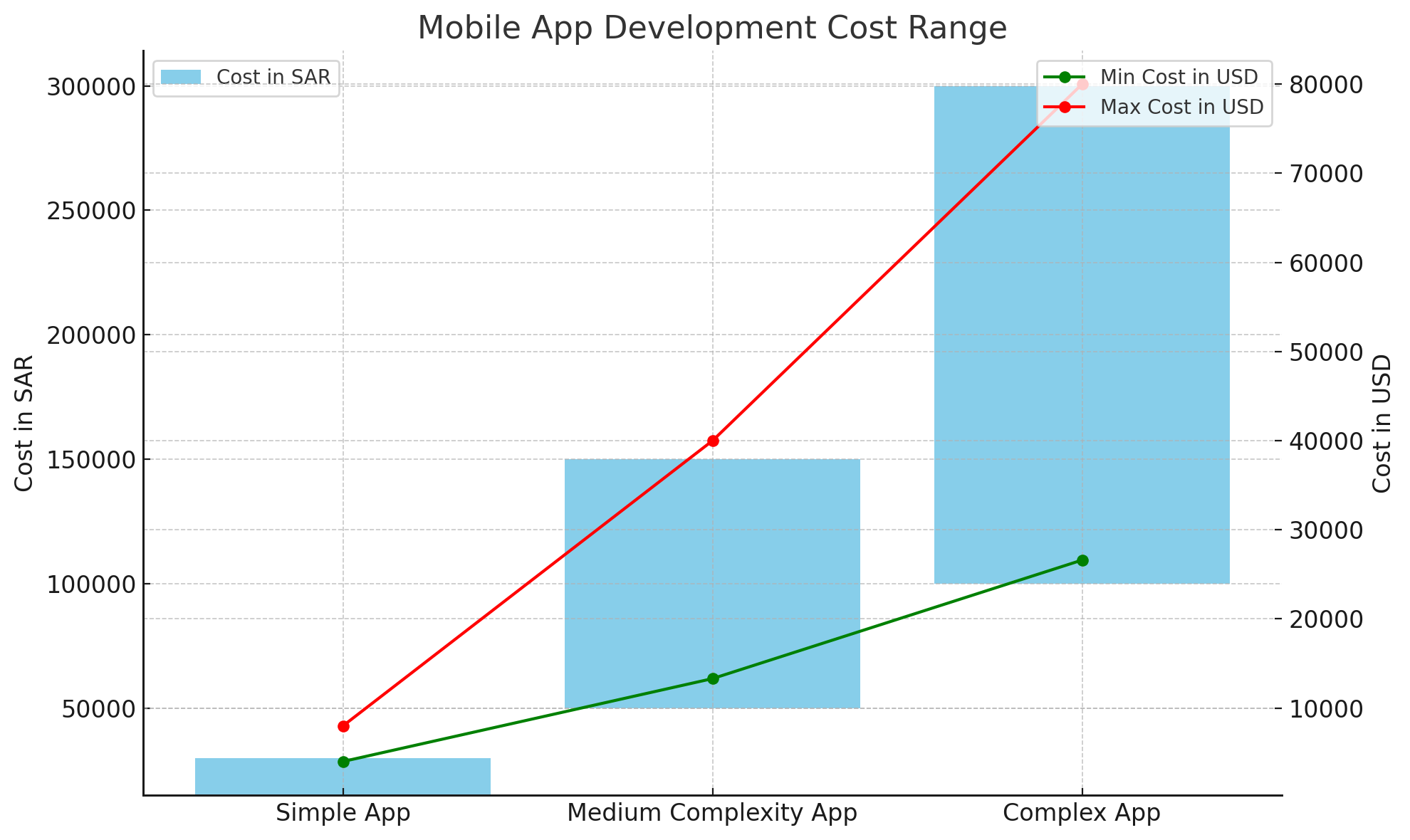
Mobile app development in Saudi Arabia costs between SAR 100,000 and SAR 1,000,000+ (approximately $26,500 to $266,000) when working with a local development firm. The same quality app built with an offshore partner like Decipher Zone costs 40 to 60% less: SAR 60,000 to SAR 400,000 depending on complexity. Saudi-specific requirements including PDPL compliance, SAMA-regulated payment systems, MADA and STC Pay integration, and Arabic RTL development all add to the budget and must be planned from day one.
Key takeaways:
- Saudi Arabia's mobile app market is projected to generate $371.80 million in revenue in 2026, growing at 5.70% annually to reach $490.50 million by 2029 (Statista). The case for building is strong.
- Android holds 76% of the Saudi mobile market share in 2026 (StatCounter). Most apps should be built for Android first, with iOS as the second platform or via cross-platform frameworks.
- Saudi-specific compliance including PDPL (Personal Data Protection Law), SAMA regulations for financial apps, CITC and NCA standards, adding SAR 15,000 to SAR 75,000 to most projects and cannot be retrofitted after launch.
- Arabic RTL (right-to-left) interface development and cultural localisation cost SAR 15,000 to SAR 50,000 on top of a standard build. Apps that skip this see dramatically lower retention in the Saudi market.
- MADA payment integration costs SAR 20,000 to SAR 40,000. STC Pay and Tamara/Tabby BNPL integrations each add SAR 15,000 to SAR 30,000.
- Decipher Zone has delivered mobile applications for clients in Saudi Arabia, UAE, the US, and Europe since 2012, with senior engineers at $25 to $49 per hour. Get a transparent cost estimate for your Saudi project.
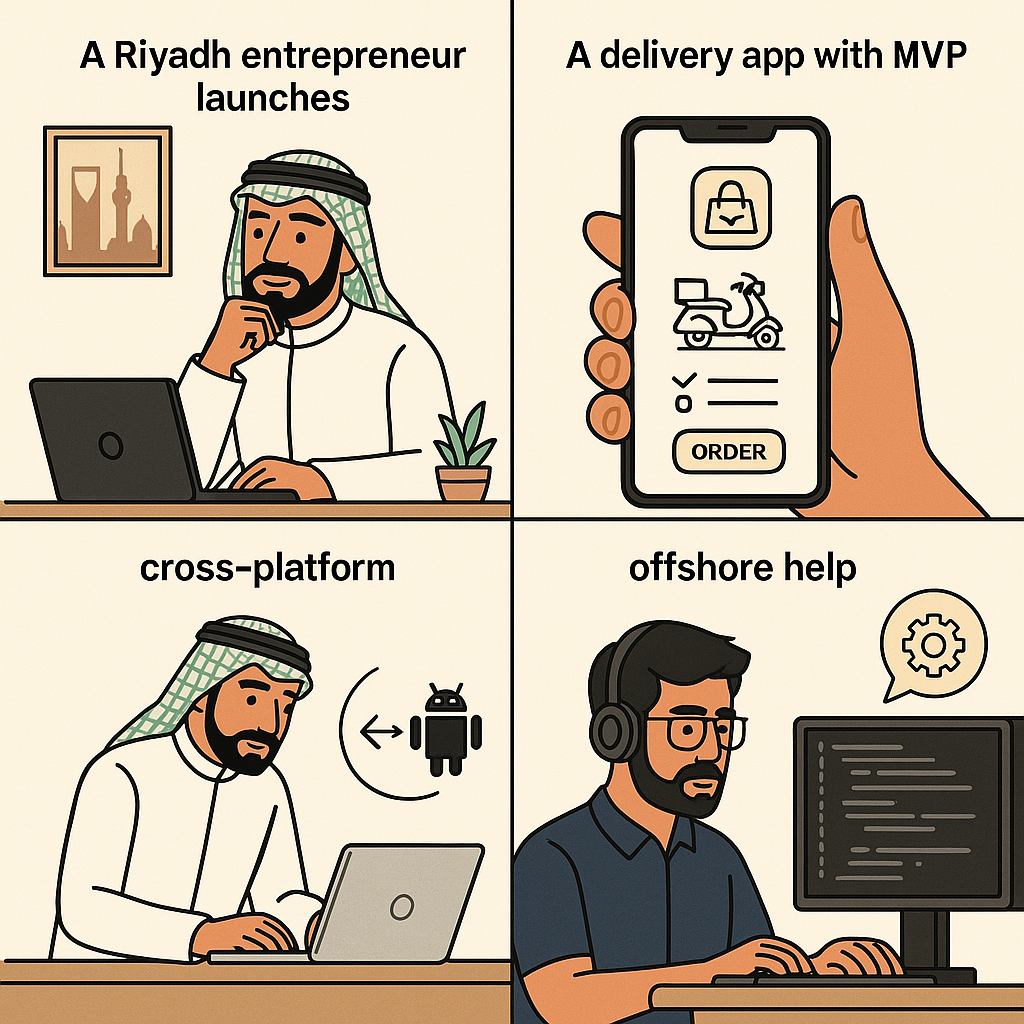
Meet Ahmed, a tech-savvy entrepreneur in Riyadh with a brilliant app idea. Eager to turn his vision into reality, he contacts a few mobile app development companies in Saudi Arabia for quotes. The response leaves him stunned: the cost of mobile app development in Saudi Arabia is far higher than he expected.
Quotes for a fairly simple app range around SAR 150,000 or more (over $40,000), and complex apps climb toward seven figures in riyals. Ahmed begins to worry: "Is building my app going to break the bank?"
Ahmed's experience is typical. Saudi Arabia's tech boom, driven by Vision 2030's SAR 1 trillion digital transformation target, has created enormous demand for mobile apps across every sector. But local development costs reflect that demand.
This 2026 guide demystifies app development pricing in the Kingdom, shows typical cost ranges in both SAR and USD, covers Saudi-specific requirements that every budget must include, and reveals how smart entrepreneurs save 40 to 60% through offshore development without compromising quality.
Read: Software Development | Global Mobile App Development Cost Guide
Mobile App Development Cost in Saudi Arabia 2026: Overview by Complexity
The Saudi mobile app market is projected to reach $490.50 million by 2029, growing steadily from $371.80 million in 2026. The entire broader app ecosystem, including enterprise and B2B platforms, is on course to reach $2.3 billion by 2030. This growth has made Saudi Arabia one of the most active mobile development markets in the Middle East, and local agencies price accordingly.
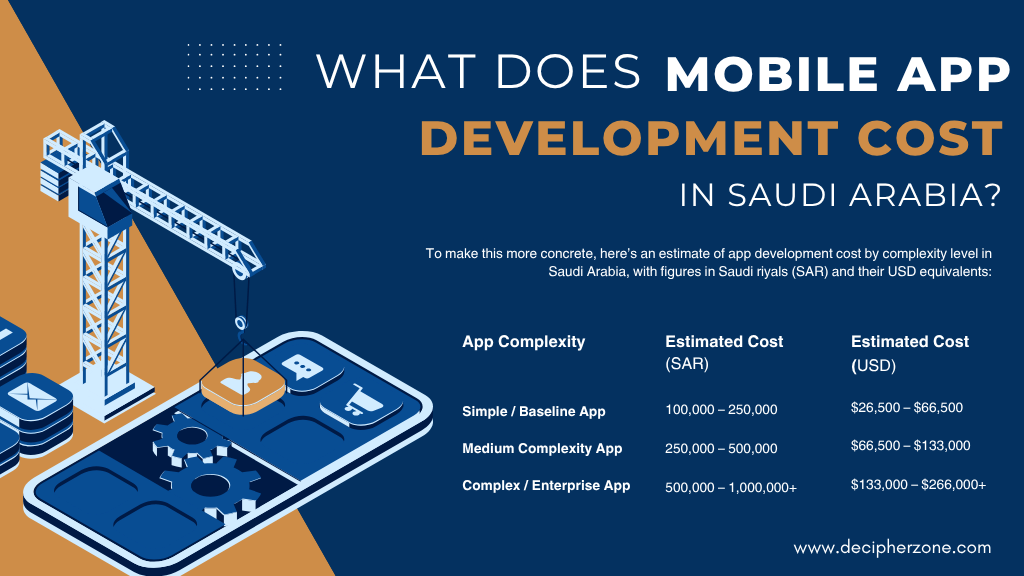
Here is what mobile app development actually costs in Saudi Arabia in 2026, with both local and offshore figures so you can make an informed comparison:
| App Complexity | Local KSA Firm (SAR) | Local KSA Firm (USD) | Decipher Zone Offshore (SAR) | Decipher Zone Offshore (USD) | Timeline |
|---|---|---|---|---|---|
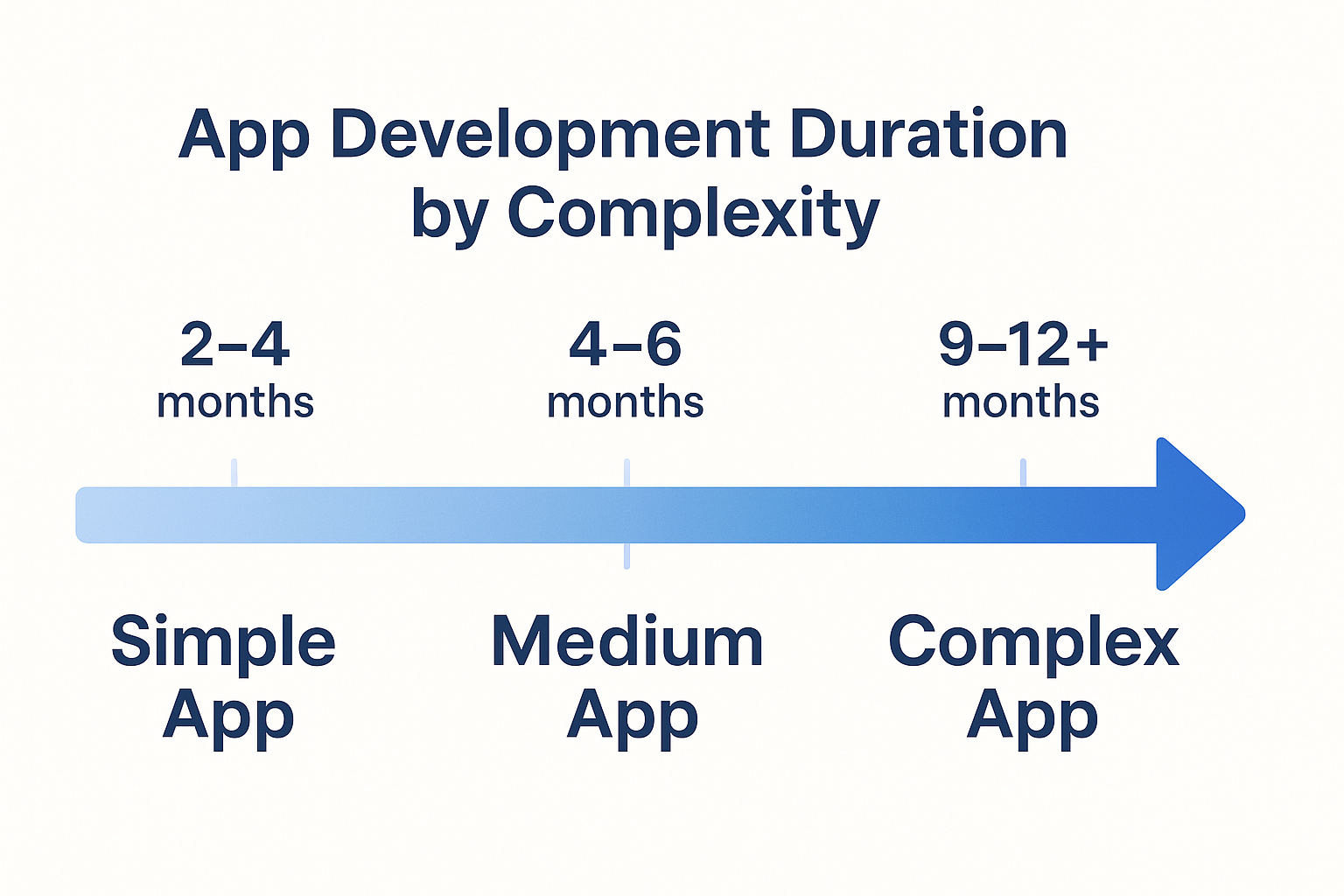
| Simple MVP (8-10 screens, auth, basic CRUD) | 100,000 to 250,000 | $26,500 to $66,500 | 50,000 to 100,000 | $13,300 to $26,600 | 2 to 4 months |
| Medium Complexity (payments, chat, analytics, admin) | 250,000 to 500,000 | $66,500 to $133,000 | 120,000 to 230,000 | $32,000 to $61,300 | 4 to 7 months |
| Complex App (real-time, AI, multi-role, compliance) | 500,000 to 1,000,000+ | $133,000 to $266,000+ | 250,000 to 500,000 | $66,600 to $133,300 | 7 to 12 months |
| Enterprise Platform (SAP/Oracle integration, SAMA compliance, data sovereignty) | 1,000,000 to 3,000,000+ | $266,000 to $800,000+ | 450,000 to 1,200,000 | $120,000 to $320,000 | 10 to 18 months |
These ranges assume working with a professional development firm. Local Saudi agencies toward the higher end reflect elevated talent costs, office overhead, and the smaller competitive market. Decipher Zone's offshore rates reflect senior India-based engineers at $25 to $49 per hour, delivering the same technical output at 40 to 60% lower cost.
Mobile App Development Cost in Saudi Arabia by App Type
The type of app you build changes the cost range within any complexity tier. Saudi-specific requirements like SAMA compliance, MADA integration, and PDPL data handling vary dramatically by vertical. Here is what each major category realistically costs to build in 2026:
| App Type | Cost Range (SAR) | Cost Range (USD) | Saudi-Specific Cost Driver |
|---|---|---|---|
| eCommerce (like Noon, Namshi) | 56,000 to 245,000 | $15,000 to $65,000 | MADA payment, STC Pay, Tabby/Tamara BNPL integration, Arabic product catalog |
| Food Delivery / On-Demand (like Jahez, Hunger Station) | 150,000 to 500,000 | $40,000 to $133,000 | Three-sided app (customer, driver, restaurant), Arabic RTL, real-time GPS, SADAD |
| Fintech / Digital Wallet | 300,000 to 900,000 | $80,000 to $240,000 | SAMA licensing compliance, MADA/STC Pay, Lean API (open banking), KYC/AML |
| Healthcare / Telemedicine | 200,000 to 700,000 | $53,000 to $187,000 | MOH integration, Sehhaty platform API, PDPL health data compliance, Arabic UI |
| Real Estate / Property (like Bayut KSA) | 150,000 to 450,000 | $40,000 to $120,000 | Saudi map integration, Absher ID verification, REGA compliance, Arabic listings |
| Government / B2G | 500,000 to 2,000,000+ | $133,000 to $533,000+ | Nafath authentication, data sovereignty (must be on KSA servers), NCA security audit |
| EdTech / eLearning | 100,000 to 350,000 | $26,500 to $93,000 | Arabic content delivery, MOE curriculum alignment, offline mode for rural areas |
| AI-Powered App | 300,000 to 1,000,000+ | $80,000 to $266,000+ | Arabic NLP model training, Nafath biometric integration, data residency requirements |
Read: Fintech Software Development Guide | Types of Healthcare Software | EHR Software Development Guide
Saudi-Specific Compliance Costs: PDPL, SAMA, CITC, and NCA
This is the cost category that surprises entrepreneurs most. Saudi Arabia has its own regulatory framework for digital products, and every app that handles user data, financial transactions, or government services must comply. Building compliance in from the start costs a fraction of retrofitting it after launch.
PDPL (Personal Data Protection Law)
Saudi Arabia's Personal Data Protection Law came into force in 2021 and is actively enforced from 2023. Any app that collects, stores, or processes personal data of Saudi residents must comply. Requirements include explicit consent management, data residency rules, breach notification procedures, and data minimisation policies.
PDPL compliance adds SAR 15,000 to SAR 40,000 to a typical app build depending on data sensitivity. Healthcare and fintech apps with regulated personal data face higher compliance costs in the SAR 40,000 to SAR 75,000 range. Non-compliance penalties can reach SAR 5 million, making the upfront investment straightforward to justify.
SAMA (Saudi Central Bank) Compliance
Any app processing payments, operating a digital wallet, providing buy-now-pay-later functionality, or touching banking data in Saudi Arabia must meet SAMA's Open Banking Framework and payment processing standards. SAMA compliance for a fintech app adds SAR 50,000 to SAR 150,000 to the development budget when you include required security architecture, audit preparation, and third-party assessment. Apps using the Lean API (Saudi open banking connectivity) require additional integration and testing work in the SAR 20,000 to SAR 50,000 range.
CITC and NCA Standards
The Communications, Space and Technology Commission (CITC) sets standards for telecom-integrated apps. The National Cybersecurity Authority (NCA) sets security baselines for apps handling sensitive data, including encryption requirements and penetration testing obligations. Government and enterprise apps require NCA Essential Cybersecurity Controls (ECC) compliance, which adds a security audit cost of SAR 25,000 to SAR 80,000.
Read: Custom Software Development | Offshore Software Development
Arabic RTL Development and Localisation Cost
Arabic is the primary language of Saudi Arabia, written right-to-left. Building a truly Arabic-first app is not a translation task. It requires RTL-native UI architecture, culturally appropriate design, and Arabic content throughout every user flow.
| Localisation Task | Cost (SAR) | Notes |
|---|---|---|
| Arabic RTL UI implementation | 15,000 to 35,000 | Layout mirroring, RTL typography, bidirectional text handling |
| Arabic content translation and adaptation | 8,000 to 20,000 | Professional translation, cultural review, not machine translation |
| Arabic NLP / AI language support | 30,000 to 100,000+ | Training data, model fine-tuning, Arabic dialect handling |
| Dual language (Arabic + English) | 20,000 to 50,000 | Full bidirectional app including state management for language switch |
| Cultural UX adaptation | 10,000 to 25,000 | Navigation patterns, imagery, colour meanings, date/calendar formats (Hijri) |
Apps that treat Arabic as an afterthought see churn rates 2 to 3 times higher than Arabic-first apps in the Saudi market. The investment in proper RTL development returns immediately in retention metrics.
Saudi Payment Integration Costs: MADA, STC Pay, Apple Pay, Tamara, Tabby
Saudi Arabia has its own payment ecosystem. Generic Stripe or PayPal integrations do not cover the payment methods that Saudi users expect. Building the right payment stack is a specific cost line item.
| Payment Method | Integration Cost (SAR) | Notes |
|---|---|---|
| MADA (Saudi domestic debit network) | 20,000 to 40,000 | Mandatory for any ecommerce or fintech app targeting Saudi users; SAMA compliant |
| STC Pay | 15,000 to 30,000 | Saudi Telecom digital wallet; high penetration among younger demographics |
| Apple Pay / Google Pay | 10,000 to 20,000 | Standard card tokenisation; Saudi users have high Apple Pay adoption on iOS |
| Tamara (BNPL) | 15,000 to 30,000 | Buy now pay later; licensed by SAMA; widely adopted in ecommerce |
| Tabby (BNPL) | 15,000 to 30,000 | Direct competitor to Tamara; many apps integrate both for user choice |
| SADAD (government bill payment) | 20,000 to 45,000 | Required for apps accepting utility, government, or telecom payments |
| Lean API (open banking) | 25,000 to 60,000 | Saudi open banking standard for account data and payment initiation |
A full Saudi payment stack (MADA plus STC Pay plus Apple Pay plus one BNPL provider) adds SAR 60,000 to SAR 120,000 to the development budget. This is not optional for any consumer ecommerce or fintech app.
Developer Hourly Rates in Saudi Arabia vs Offshore (2026)
| Team Type | Hourly Rate (SAR) | Hourly Rate (USD) | Full App (Medium, ~1,200 hrs) |
|---|---|---|---|
| In-House Developer (KSA) | SAR 150 to 300/hr | $40 to $80/hr | SAR 180,000 to 360,000 |
| Local KSA Agency (Senior) | SAR 200 to 560/hr | $53 to $150/hr | SAR 240,000 to 670,000 |
| Offshore Agency (India, eg. Decipher Zone) | SAR 75 to 185/hr | $20 to $49/hr | SAR 90,000 to 222,000 |
| Offshore Freelancer (India/SE Asia) | SAR 37 to 112/hr | $10 to $30/hr | SAR 44,000 to 134,000 |
The difference between a KSA local agency and Decipher Zone on a medium-complexity app runs SAR 150,000 to SAR 450,000. For a complex enterprise app, that gap reaches SAR 500,000 or more. The cost difference is not driven by quality: it is driven by salary baselines, office costs, and operating expenses that KSA agencies carry and pass to clients.
Cost Comparison: Local Saudi Firms vs Decipher Zone (Offshore)
Here is a clear comparison of what the same projects cost with a KSA local firm versus Decipher Zone's offshore model:
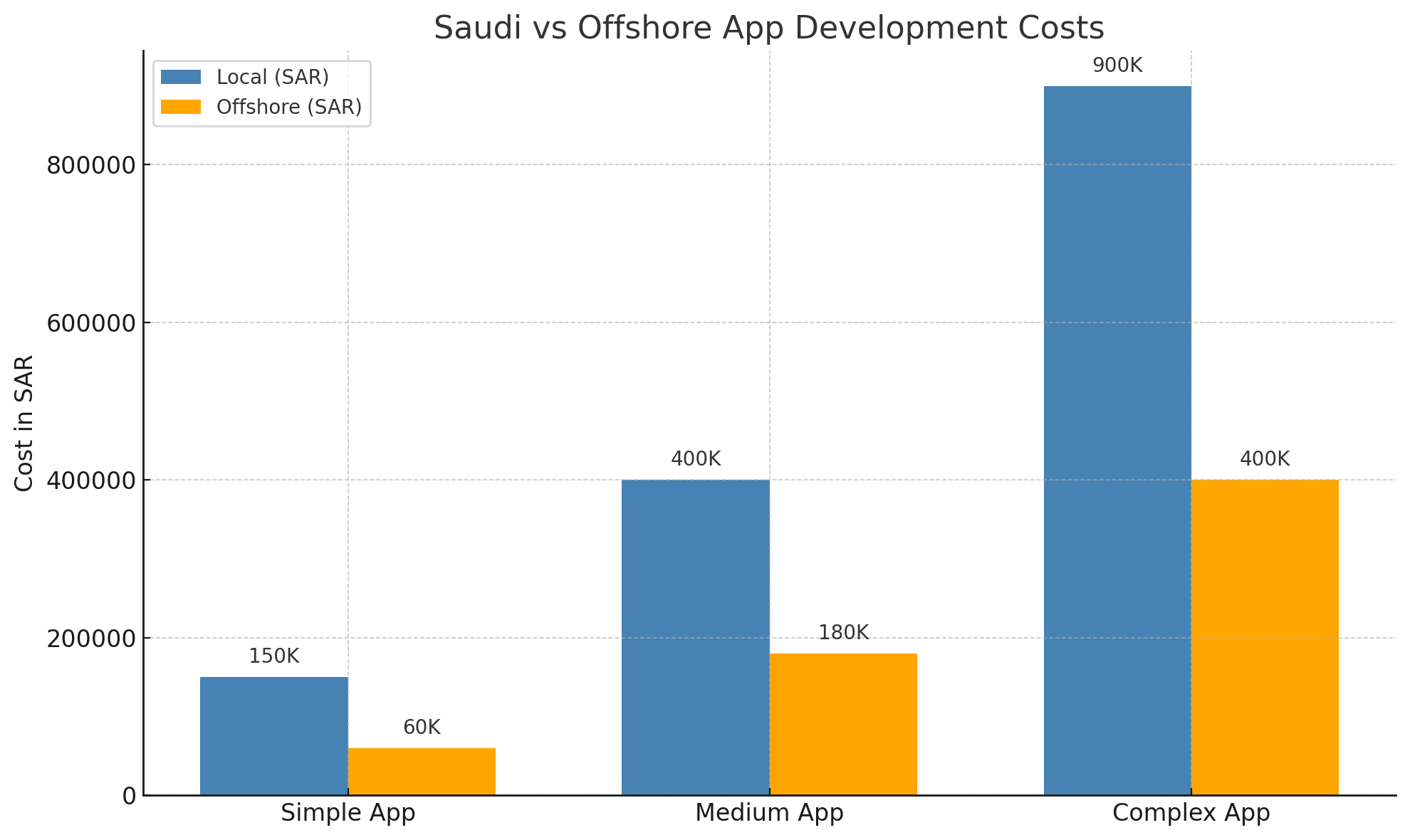
| Project Type | Saudi Local Company (SAR) | Decipher Zone Offshore (SAR) | Savings |
|---|---|---|---|
| Simple App | ~150,000 | ~60,000 | 60% |
| Medium App (with MADA + Arabic) | ~400,000 | ~180,000 | 55% |
| Complex App (with SAMA + PDPL) | ~900,000 | ~400,000 | 56% |
| Enterprise Platform (data sovereignty) | ~2,000,000 | ~900,000 | 55% |
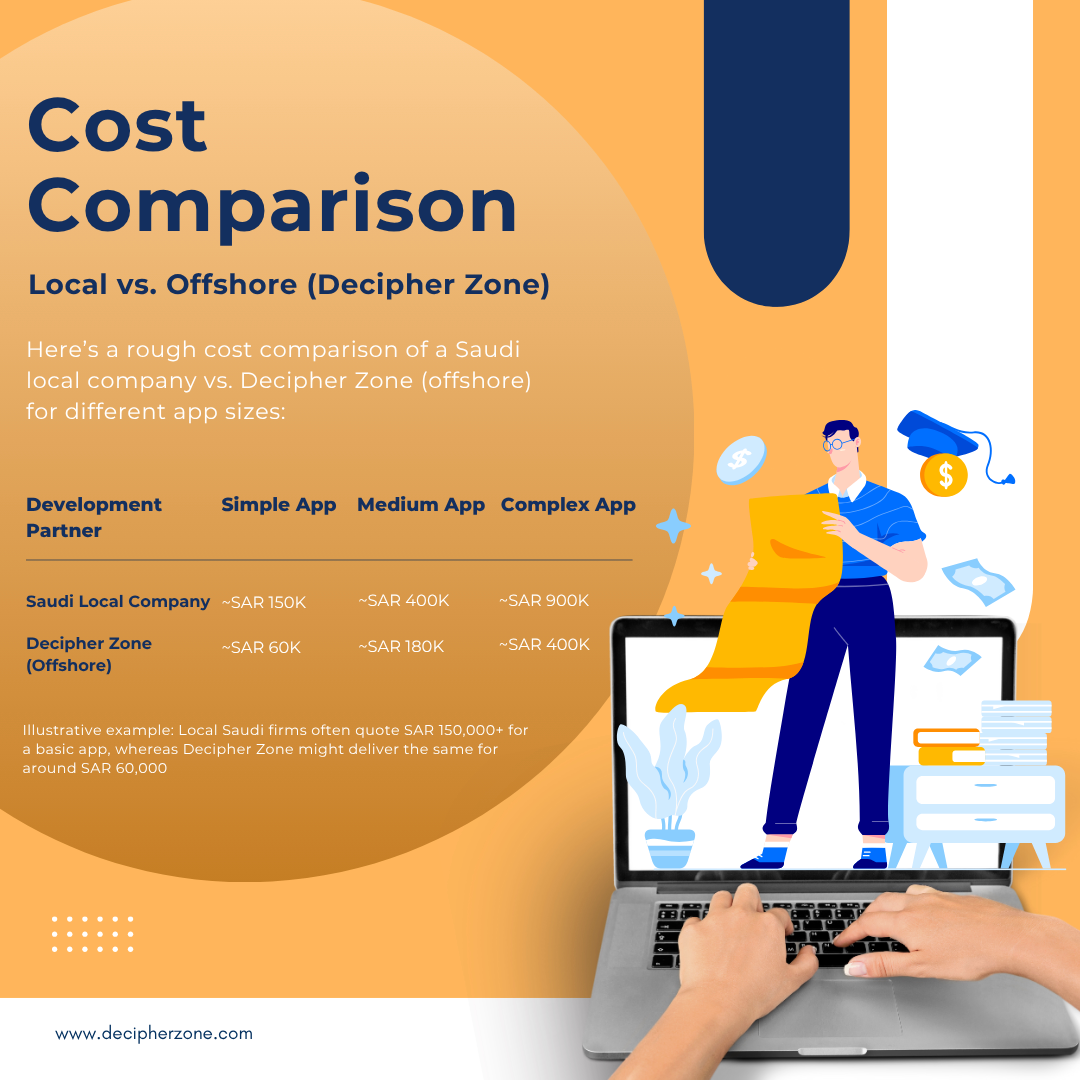
Lower cost does not mean lower quality. Offshore development is a proven model that reduces cost by 40 to 60% without sacrificing quality when the partner has genuine process maturity. Decipher Zone's teams follow the same Agile practices, code review standards, and QA processes that enterprise clients in the US and EU expect. The cost difference comes from geography, not from cutting corners.
Phase-by-Phase Cost Breakdown: Where Your Budget Goes
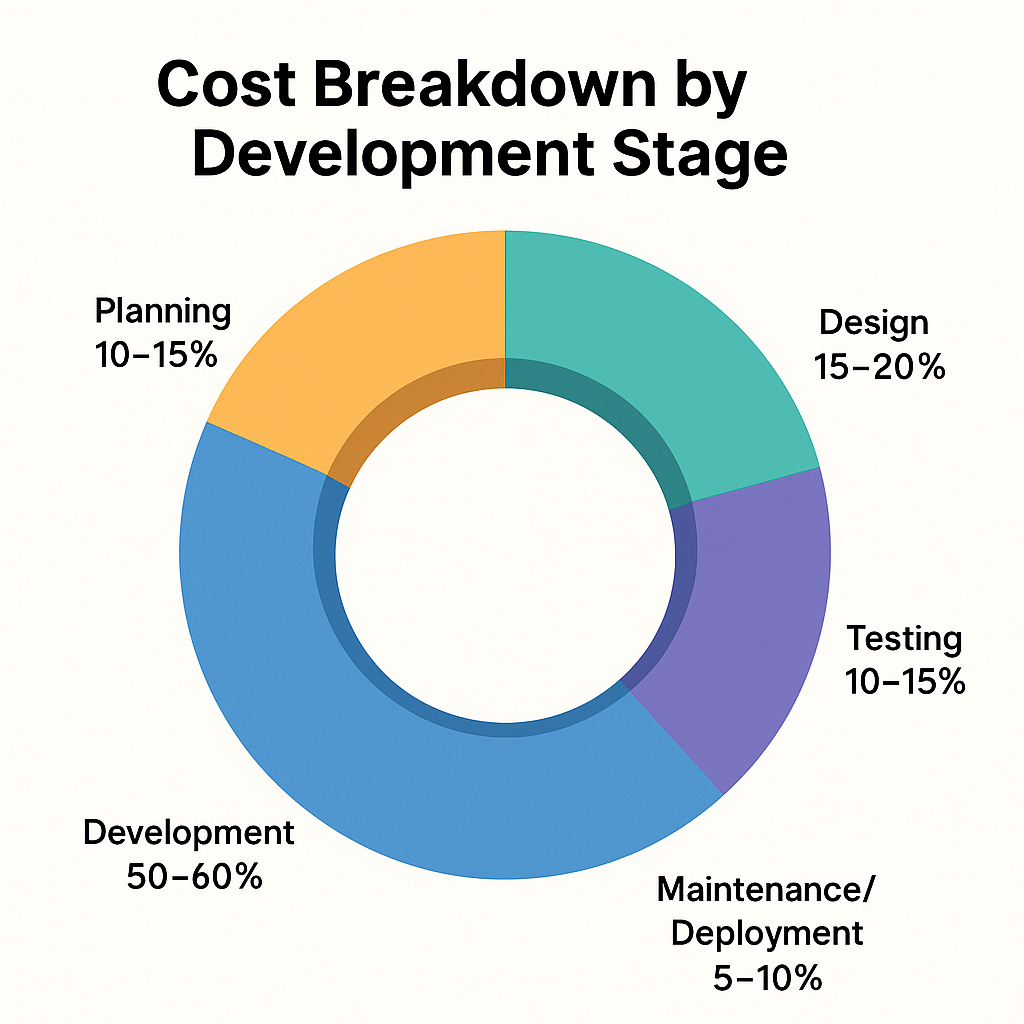
Understanding how cost is distributed across the development lifecycle helps you evaluate vendor quotes and protect your budget from surprises.
| Development Phase | % of Total Budget | For SAR 300,000 Project | What Happens Here |
|---|---|---|---|
| Discovery and Planning | 10 to 15% | SAR 30,000 to 45,000 | Requirements, compliance mapping, architecture, tech stack, sprint planning |
| UI/UX Design (including Arabic RTL) | 15 to 20% | SAR 45,000 to 60,000 | Wireframes, Arabic-first design, cultural adaptation, prototype, user testing |
| Frontend Development | 20 to 25% | SAR 60,000 to 75,000 | Screen implementation, RTL layout, animations, API integration on client side |
| Backend and API Development | 20 to 25% | SAR 60,000 to 75,000 | Business logic, payment integrations (MADA/STC Pay), database, authentication |
| Compliance and Security | 5 to 15% | SAR 15,000 to 45,000 | PDPL architecture, SAMA integration, NCA security controls, penetration testing |
| QA and Testing | 10 to 15% | SAR 30,000 to 45,000 | Manual and automated testing, Arabic text validation, device coverage, performance |
| Deployment and Launch | 5 to 8% | SAR 15,000 to 24,000 | App store submission, Saudi cloud region setup, monitoring configuration |
Platform Strategy for Saudi Arabia: Android, iOS, or Cross-Platform?
Android holds 76% of the Saudi mobile market share in 2026 (StatCounter). This is a critical data point for any platform decision. Most Saudi consumer apps should prioritise Android, then add iOS. Cross-platform frameworks like Flutter and React Native allow you to build both simultaneously for 30 to 50% less than two native codebases.
| Platform Choice | Estimated Cost (SAR) | Best For | Saudi Market Fit |
|---|---|---|---|
| Android only | 75,000 to 400,000 | Consumer apps, MVPs, on-demand services | Excellent: covers 76% of KSA users; lower cost entry point |
| iOS only | 90,000 to 420,000 | Premium consumer apps, enterprise, B2B | Good: iOS users in KSA have higher average spend; relevant for fintech and luxury |
| Cross-platform (Flutter / React Native) | 100,000 to 500,000 | MVPs, ecommerce, marketplaces, startups | Best for most Saudi projects: covers both markets at 30-50% lower cost than two native builds |
| Native iOS and Android | 200,000 to 900,000+ | Enterprise apps needing deep hardware access, AR/VR, IoT | High cost; justified only when native performance or hardware features are essential |
Read: Cross-Platform App Development Guide | Flutter vs React Native Comparison
Why Are Saudi App Development Costs Higher?
If you have gathered that local app development in Saudi Arabia is expensive, you are probably wondering why. Several factors unique to the Saudi market contribute to the higher price tags.
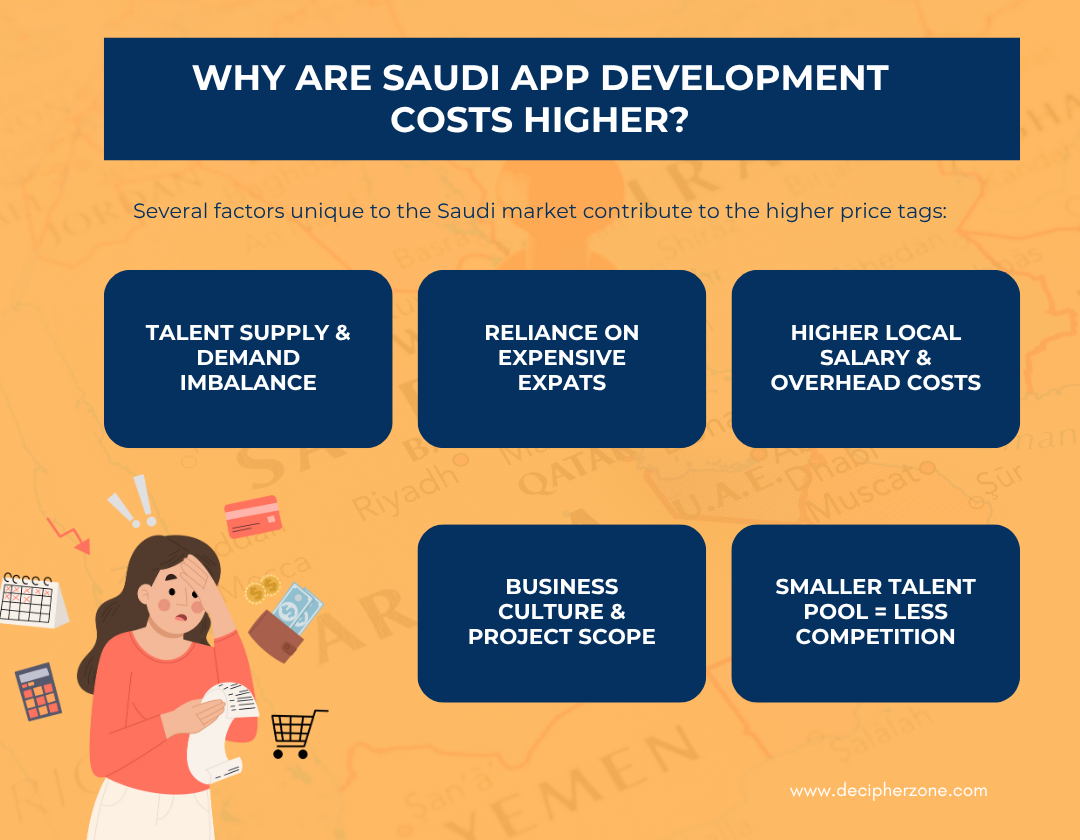
1. Talent Supply and Demand Imbalance
Saudi Arabia's tech sector is booming, fuelled by Vision 2030 and massive digital transformation projects. There is roughly a 20% tech talent gap, with approximately 20% more tech jobs than qualified people to fill them. This shortage means skilled developers are in high demand and can command premium salaries. When government projects with large budgets compete for the same small talent pool, market rates for everyone go up.
2. Reliance on Expensive Expats
Many mobile app development companies in Saudi Arabia employ expatriate developers from the US, Europe, or India who command higher salaries in exchange for relocating. These expat hires come with relocation packages, housing allowances, and premium compensation that local agencies pass directly into project quotes.
3. High Local Salary and Overhead Costs
A mid-level software engineer in Riyadh or Jeddah earns around SAR 11,000 per month on average (approximately $2,900), and senior developers earn considerably more. On an hourly basis, local developer rates in the SAR 200 to SAR 560 per hour range (approximately $53 to $150/hr) are comparable to Western European markets. Add office rent in Riyadh commercial districts, employment compliance costs, and Saudisation (Nitaqat) quotas, and every local agency carries significant fixed overhead baked into every quote.
4. Saudi-Specific Compliance Overhead
PDPL compliance, SAMA regulations, NCA security standards, and CITC requirements all add genuine engineering work that raises project costs above comparable apps in less regulated markets. This compliance overhead is legitimate and necessary. It simply needs to be planned for rather than discovered mid-project.
5. Data Sovereignty Requirements
Government and regulated enterprise apps must host data on Saudi cloud regions. AWS Middle East (Bahrain), Oracle Cloud Saudi Arabia, and the Saudi Cloud Computing Company (SCC) all provide KSA-region hosting, but these regions carry higher infrastructure costs than global regions. Government B2G apps must additionally meet specific server certification requirements, adding SAR 30,000 to SAR 100,000 in infrastructure design and compliance work.
6. Smaller Talent Pool, Less Competition
Compared to India with millions of developers, Saudi Arabia's developer community is relatively small. Fewer competing mobile app development companies in Saudi Arabia means less price pressure on established firms. The top firms can charge a premium because there are fewer equally skilled alternatives locally.
Read: On-Demand App Ideas | POS Software for Saudi Arabia
How Decipher Zone Delivers High-Quality Apps at 40-60% Lower Cost
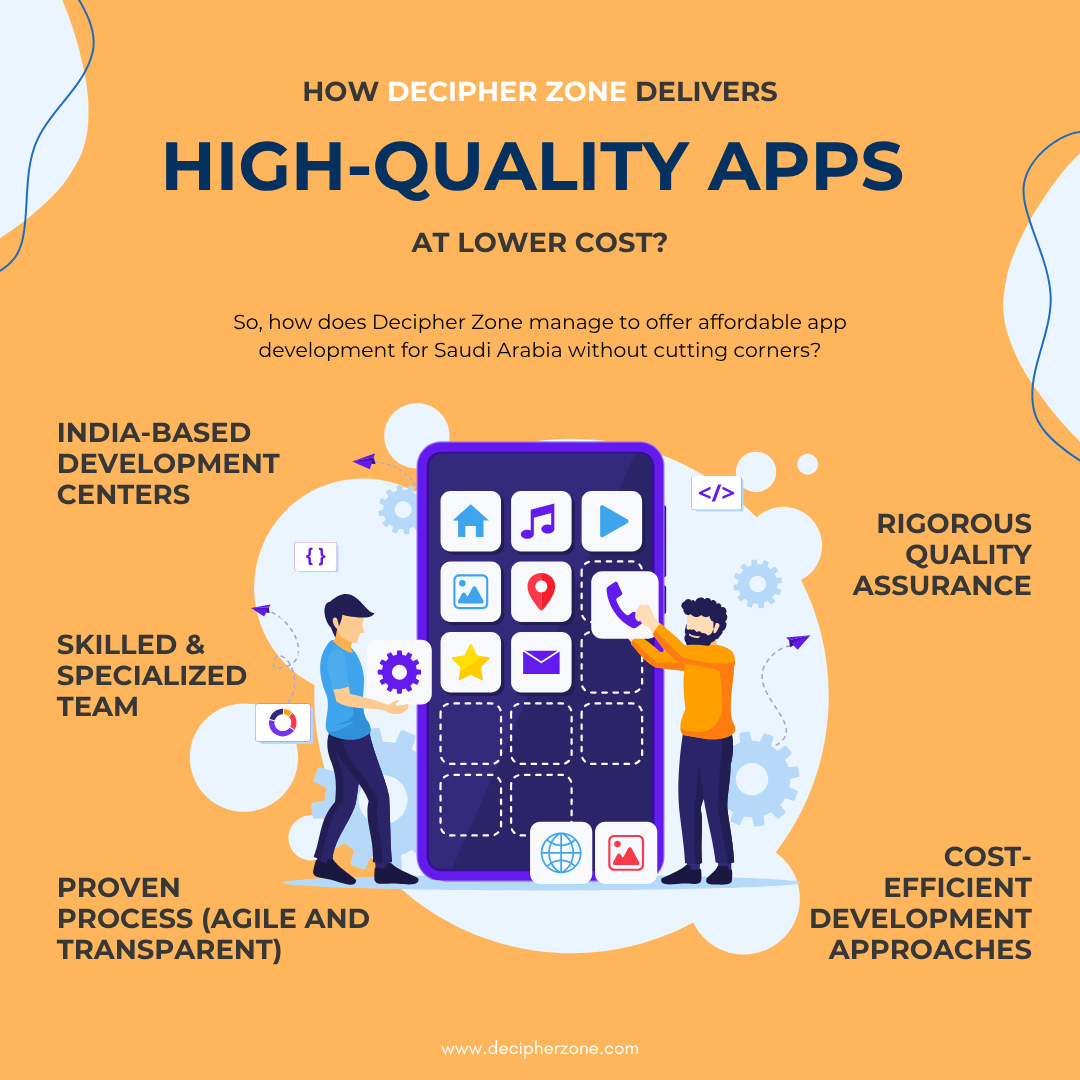
How does Decipher Zone manage to offer affordable app development for Saudi businesses without cutting corners? The answer is their offshore development model combined with strong delivery processes and genuine Middle East experience.
1. India-Based Development Centers with Middle East Experience
Decipher Zone is a custom software and mobile app development company headquartered in India with offices in Jaipur and Gurugram. By operating in India, Decipher Zone can hire experienced senior engineers at much lower salary rates than a Saudi firm would pay locally. This cost advantage is passed directly to clients as savings. The same technical output costs 60 to 70% less simply because of geography, not quality.
Crucially, Decipher Zone has delivered projects for clients in Saudi Arabia, UAE, Europe, and the US. Their teams understand Saudi compliance requirements, Arabic RTL development, MADA and STC Pay integration, and the cultural nuances of building for the Saudi market. This is not generic offshore development. It is offshore development with KSA-specific expertise.
2. Skilled and Specialised Team
Lower cost does not mean junior developers. Decipher Zone's team includes senior developers, architects, UI/UX designers experienced in Arabic RTL interfaces, QA testers, and compliance-aware engineers who have built PDPL-compliant and SAMA-regulated systems. They work across the full tech stack relevant to Saudi projects: React Native and Flutter for cross-platform, Java and Node.js for backend, and cloud deployment on AWS Middle East region where required.
3. Proven Agile Process with Transparent Reporting
Decipher Zone follows Agile methodologies with two-week sprint cycles and working software demos at the end of every sprint. You see progress continuously rather than receiving a surprise at the end of a six-month development cycle. Dedicated project managers coordinate across KSA/IST time zones. The 2.5-hour time difference between Saudi Arabia (AST) and India (IST) means meaningful daily overlap hours for communication and reviews.
4. Rigorous Quality Assurance
Every app goes through comprehensive testing: unit tests, integration tests, Arabic text validation, RTL layout testing across device sizes, payment gateway sandbox testing, performance testing under Saudi network conditions, and security testing aligned with NCA standards. QA is integrated throughout development, not bolted on at the end, which catches issues when they are cheap to fix rather than after they reach production.
5. Cost-Efficient Technical Approaches
For most Saudi consumer apps, Decipher Zone recommends cross-platform Flutter development (covering both Android and iOS from one codebase), established API integrations for payments rather than custom payment processing, and cloud-native architecture on AWS Middle East region that scales with usage rather than requiring upfront infrastructure investment. This approach typically saves SAR 50,000 to SAR 150,000 on a medium-complexity project compared to a native multi-platform build.
Case Study: Saudi Startup Saves 50% with Decipher Zone
A Riyadh-based startup needed a custom mobile app for a new eCommerce marketplace. The app required user accounts, product listings, MADA and STC Pay payment integration, Arabic RTL interface, and real-time order tracking, a medium-complexity project with Saudi-specific requirements. Local development firms quoted around SAR 800,000 (~$213k) and estimated 8 to 10 months to build.
The startup engaged Decipher Zone instead. By offshoring the development to India, Decipher Zone delivered the app for roughly SAR 400,000 (~$106k), a saving of approximately 50%, delivered in just 6 months. The app passed all quality benchmarks: MADA and STC Pay fully integrated, Arabic RTL throughout, PDPL-compliant user data handling, and a scalable cloud backend on AWS Bahrain region. The startup launched successfully without breaking their budget.
Read: Guide to Offshore Development Centres in India | Hiring Developers: India vs Eastern Europe
Tips to Control Mobile App Development Cost in Saudi Arabia
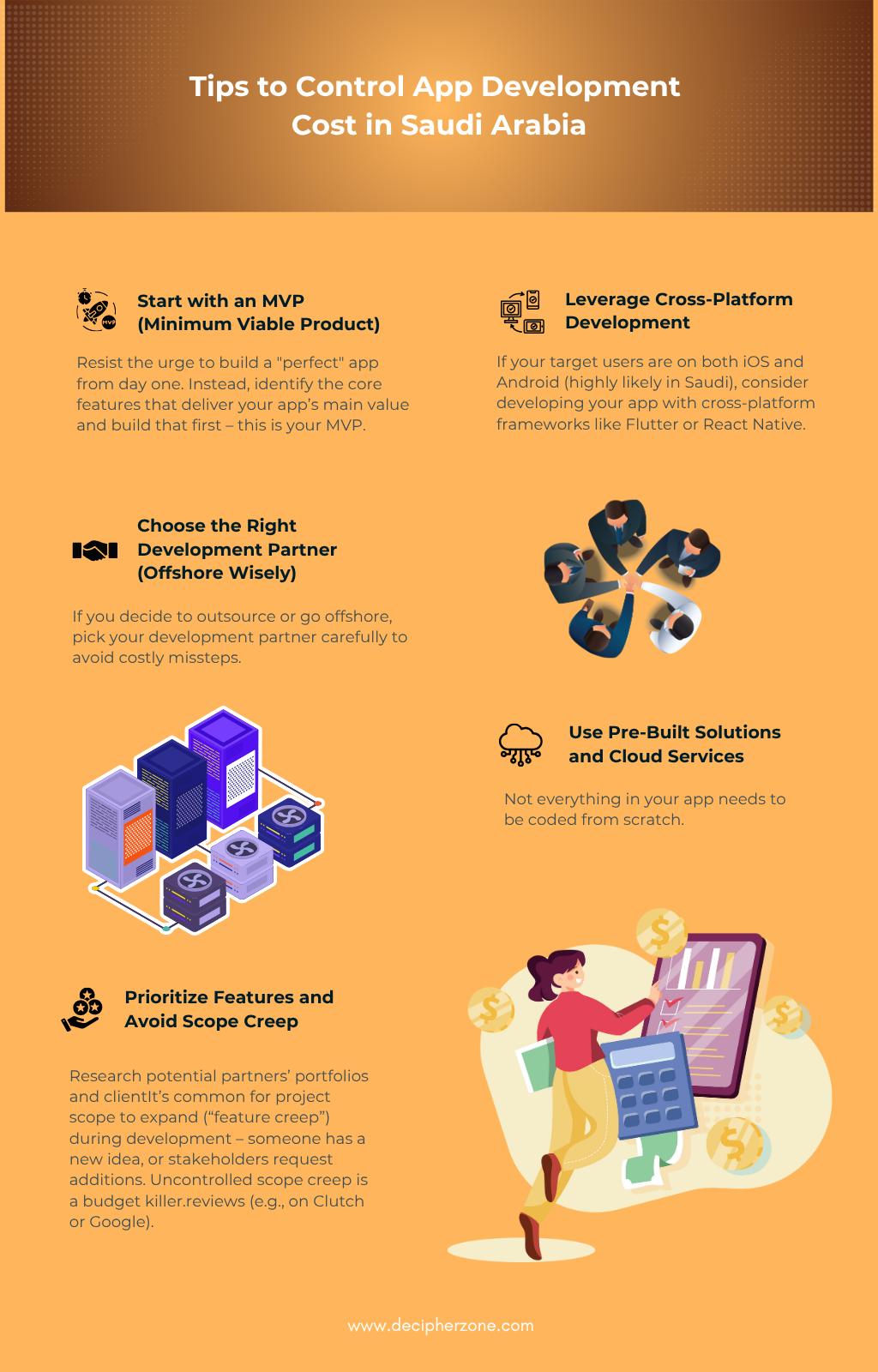
1. Start with an MVP: Launch Lean, Scale Smart
Resist the urge to build a perfect app from day one. Identify the core features that deliver your app's main value and build that first: your MVP. By keeping the initial scope lean, you dramatically cut down development time and cost. Launch faster, gather user feedback from real Saudi users, then iterate. In Saudi Arabia's fast-moving market, where competitors are racing to build Vision 2030-aligned digital products, an MVP-first approach helps you test the waters without a huge financial risk.
Read: MVP Development Guide | Low-Cost MVP Development
2. Leverage Cross-Platform Development for Both iOS and Android
Given Android's 76% KSA market share, many founders wonder whether to build for Android only. The smarter approach for most businesses is cross-platform with Flutter or React Native. These frameworks build a single codebase that runs on both Android and iOS, saving 30 to 50% on development effort. You reach the full Saudi market from launch day rather than building a native Android app and then starting over for iOS six months later.
3. Build Compliance Architecture In, Not On
PDPL compliance, SAMA regulations, and NCA security controls cost 3 to 5 times more to retrofit after launch than to build in during development. The startup that skips PDPL architecture to save SAR 20,000 and then faces a SAR 5 million regulatory fine has not saved money. Plan your compliance requirements in the discovery phase, architect for them from day one, and budget for them explicitly. Your development partner should be able to advise on exactly which regulations apply to your specific app type.
4. Use Saudi-Native Payment APIs Rather Than Building Custom
Do not build custom payment processing when Saudi payment APIs (HyperPay, Moyasar, PayTabs) provide certified MADA and STC Pay integration. These payment gateway APIs handle SAMA compliance and support all major Saudi payment methods at integration cost rather than custom development cost. The difference between using a certified gateway and building custom MADA integration is typically SAR 30,000 to SAR 80,000.
5. Prioritise Features and Manage Scope Ruthlessly
Rank every feature as Must-Have, Should-Have, or Nice-to-Have before development begins. Build only the Must-Haves for version 1. Any new feature request during development should go through a written change request with time and cost estimate before being approved. Uncontrolled scope changes are the single largest cause of mobile app budget overruns in the Saudi market, where ambitious Vision 2030-aligned feature sets are common starting points.
6. Choose the Right Offshore Partner: A Verification Checklist
If you go offshore, picking the right partner is the most important decision. Here is a practical checklist for evaluating a Saudi offshore development partner:
- Saudi-specific compliance experience: Can they describe how they implemented PDPL compliance or MADA integration on a previous project? Vague answers mean they have not done it before.
- Arabic RTL portfolio: Ask to see screenshots or a live demo of Arabic-interface apps they have built. RTL development is a specific skill, not a general capability.
- Middle East client references: A partner with existing Saudi or UAE clients can give you a reference call in the same time zone and cultural context. This is more valuable than references from European or US clients.
- Communication overlap: Saudi AST and India IST differ by 2.5 hours. Confirm what daily overlap window the partner commits to for synchronous communication.
- IP and NDA terms: All source code ownership must transfer to you on final payment. Reputable partners have no issue with this. If they push back on clear IP terms, walk away.
- Start with a paid pilot: Consider beginning with a SAR 15,000 to SAR 30,000 discovery or prototype phase. This evaluates the partner's actual output before committing to a full build.
Read: Offshore Development Guide | Project Management for Software Development
7. Use Pre-Built Solutions for Standard Functions
Not everything in your app needs custom code:
- Payment gateways: HyperPay, Moyasar, and PayTabs provide certified MADA, STC Pay, and Apple Pay integration through tested SDKs. No custom payment processing needed.
- Map APIs: Google Maps and Apple Maps APIs handle navigation in Saudi Arabia. Building custom mapping is unnecessary for most apps.
- Authentication: Firebase Auth or similar handles user login, OTP, and biometrics. Absher identity verification integrates via official APIs.
- Cloud infrastructure: AWS Bahrain region provides KSA-compliant hosting for most apps at pay-as-you-go rates rather than upfront server costs.
- Open-source libraries: Leverage proven open-source libraries and backend frameworks to accelerate development without reinventing the wheel.
Using pre-built solutions for commoditised functions and applying custom development only where it clearly differentiates your app typically reduces total project cost by 20 to 30%.
Conclusion
Mobile app development in Saudi Arabia may come with a hefty price tag, but there are smart ways to achieve your goals without overspending.
- A typical app project in KSA ranges from SAR 100,000 for a simple MVP to SAR 1 million or more for a complex, compliance-heavy enterprise platform.
- Saudi app costs are elevated due to talent scarcity, high salaries, expat reliance, and genuine compliance requirements (PDPL, SAMA, CITC) that add real engineering work.
- Saudi-specific requirements including MADA and STC Pay integration, Arabic RTL, PDPL compliance, and SAMA regulations must be budgeted from the start, not discovered mid-project.
- Android holds 76% of the Saudi mobile market. Cross-platform development (Flutter/React Native) covers both Android and iOS at 30 to 50% lower cost than two native builds.
- Offshore development with Decipher Zone cuts costs 40 to 60%, turning an SAR 800,000 local quote into an SAR 400,000 offshore delivery at the same quality standard.
- MVP-first, compliance-in architecture, Saudi payment APIs, and careful scope management together can reduce your total project cost by an additional 20 to 30% regardless of who builds it.
Saudi Arabia is an exciting market for digital products. The population is young, tech-savvy, mobile-first, and growing. Vision 2030 is creating new sectors and new demand faster than local supply can match. By applying the insights in this guide, you can launch your app in this market without the budget shock that catches most founders off guard.
"Why pay more for the same app? Let Decipher Zone build your next Saudi app at world-class quality, for 40% to 60% less. Let's talk today."

Frequently Asked Questions: Mobile App Development Cost in Saudi Arabia
What is the average cost of mobile app development in Saudi Arabia in 2026?
The average mobile app development cost in Saudi Arabia in 2026 ranges from SAR 100,000 to SAR 1,000,000+ ($26,500 to $266,000+) when working with a local development firm. This wide range reflects the difference between a simple MVP (SAR 100,000 to SAR 250,000) and a complex enterprise platform with SAMA compliance, PDPL architecture, Arabic RTL, and MADA payment integration (SAR 500,000 to SAR 1,000,000+). Working with a quality offshore partner like Decipher Zone reduces these figures by 40 to 60% for the same technical output.
Why is app development expensive in Saudi Arabia?
App development is expensive in Saudi Arabia due to high local developer salaries (SAR 150 to SAR 300/hr for in-house developers), a limited pool of qualified local tech talent creating competition-driven salary inflation, reliance on expensive expatriate developers, genuine compliance requirements (PDPL, SAMA, CITC, NCA) that add real engineering work, and strong demand from Vision 2030 government and enterprise digitisation projects that keep market rates elevated.
What Saudi-specific compliance requirements affect app development cost?
The main compliance requirements are PDPL (Personal Data Protection Law) for any app collecting Saudi user data, adding SAR 15,000 to SAR 75,000 depending on data sensitivity; SAMA (Saudi Central Bank) regulations for fintech and payment apps, adding SAR 50,000 to SAR 150,000; CITC standards for telecom-integrated apps; NCA (National Cybersecurity Authority) Essential Cybersecurity Controls for sensitive apps, adding SAR 25,000 to SAR 80,000 for security audit; and Nafath authentication for apps connected to Saudi government services.
How much do Arabic RTL and localisation add to app development cost?
Arabic RTL implementation adds SAR 15,000 to SAR 35,000 for UI mirroring and bidirectional text handling. Professional Arabic content translation and adaptation adds SAR 8,000 to SAR 20,000. Building a fully dual-language app (Arabic plus English) with proper state management adds SAR 20,000 to SAR 50,000 total. Cultural UX adaptation including Hijri calendar support, appropriate imagery, and culturally relevant navigation patterns adds SAR 10,000 to SAR 25,000. Altogether, a properly localised Saudi app typically adds SAR 50,000 to SAR 130,000 above the base English-only development cost.
How much do MADA and STC Pay integrations cost?
MADA integration costs SAR 20,000 to SAR 40,000 and is mandatory for any consumer eCommerce or fintech app targeting Saudi users. STC Pay integration costs SAR 15,000 to SAR 30,000. Apple Pay and Google Pay add SAR 10,000 to SAR 20,000 each. BNPL integrations (Tamara or Tabby) cost SAR 15,000 to SAR 30,000 each. A full Saudi payment stack covering MADA, STC Pay, Apple Pay, and one BNPL provider adds SAR 60,000 to SAR 120,000 to the development budget.
Should I build for Android, iOS, or cross-platform in Saudi Arabia?
Android holds 76% of the Saudi mobile market share in 2026 (StatCounter). For most consumer apps, start with Android or use a cross-platform framework (Flutter or React Native) that covers both Android and iOS from a single codebase at 30 to 50% lower cost than two native builds. iOS is important for fintech and premium consumer apps where iOS users in Saudi Arabia have a notably higher average spend. Building two fully native apps is only justified when your app requires deep hardware access, AR/VR, or IoT features that cross-platform frameworks cannot handle natively.
Can I reduce app development costs in Saudi Arabia?
Yes, meaningfully. The highest-impact strategies are: start with an MVP rather than full features, use cross-platform Flutter or React Native to cover both platforms at lower cost, work with a quality offshore team at $25 to $49 per hour rather than SAR 200 to SAR 560 per hour locally, use certified Saudi payment gateway APIs (HyperPay, Moyasar, PayTabs) rather than custom MADA integration, build PDPL and compliance architecture in from the start rather than retrofitting it, and manage scope tightly with formal change request processes. Combining all these strategies can reduce a SAR 900,000 local project to SAR 400,000 or less offshore without compromising on compliance or quality.
Is offshore development safe for Saudi businesses?
Yes, when you choose a vetted partner. Many of Saudi Arabia's most successful digital products were built with offshore teams. The key considerations are: ensure the partner has demonstrable Saudi compliance experience (PDPL, SAMA, MADA), verify their Arabic RTL development portfolio with live examples, require proper NDA and IP assignment terms, confirm daily communication overlap hours (Saudi AST to India IST is 2.5 hours), and consider starting with a paid discovery phase of SAR 15,000 to SAR 30,000 before committing to a full build. Decipher Zone has delivered projects for Saudi and GCC clients since 2012 and maintains Middle East-specific expertise across all compliance requirements.
Author Profile: Mahipal Nehra is the Digital Marketing Manager at Decipher Zone Technologies, specializing in SEO, content strategy, and tech-driven marketing for software development and digital transformation.
Follow Mahipal on LinkedIn or explore more insights at Decipher Zone.
Disclaimer: Cost figures in this guide are estimates based on 2026 market benchmarks from industry reports, developer rate surveys (Clutch, GoodFirms, Statista), and Decipher Zone's project experience. Actual costs depend on specific project requirements and vendor selection. Some images used in this article have been generated with AI assistance.